Lacandones
Hach Winik, "hombres verdaderos"
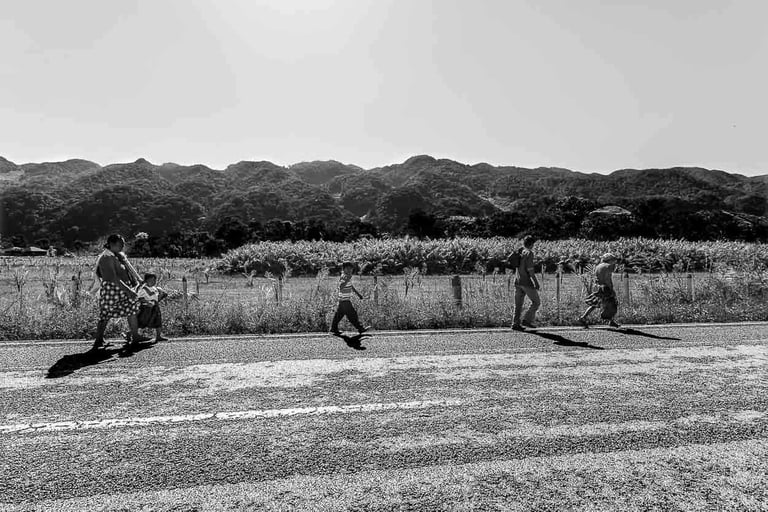
Highway 307 heading south: on one side the Montes Azules Reserve, on the other an endless plain—the political border between Mexico and Guatemala.
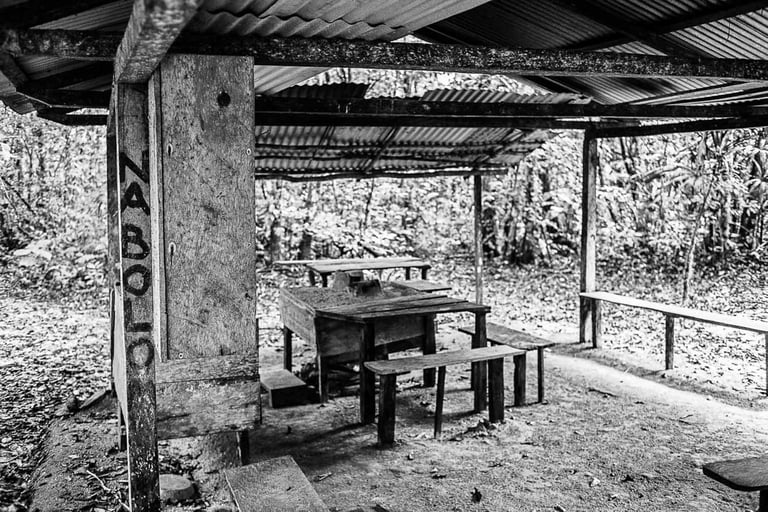
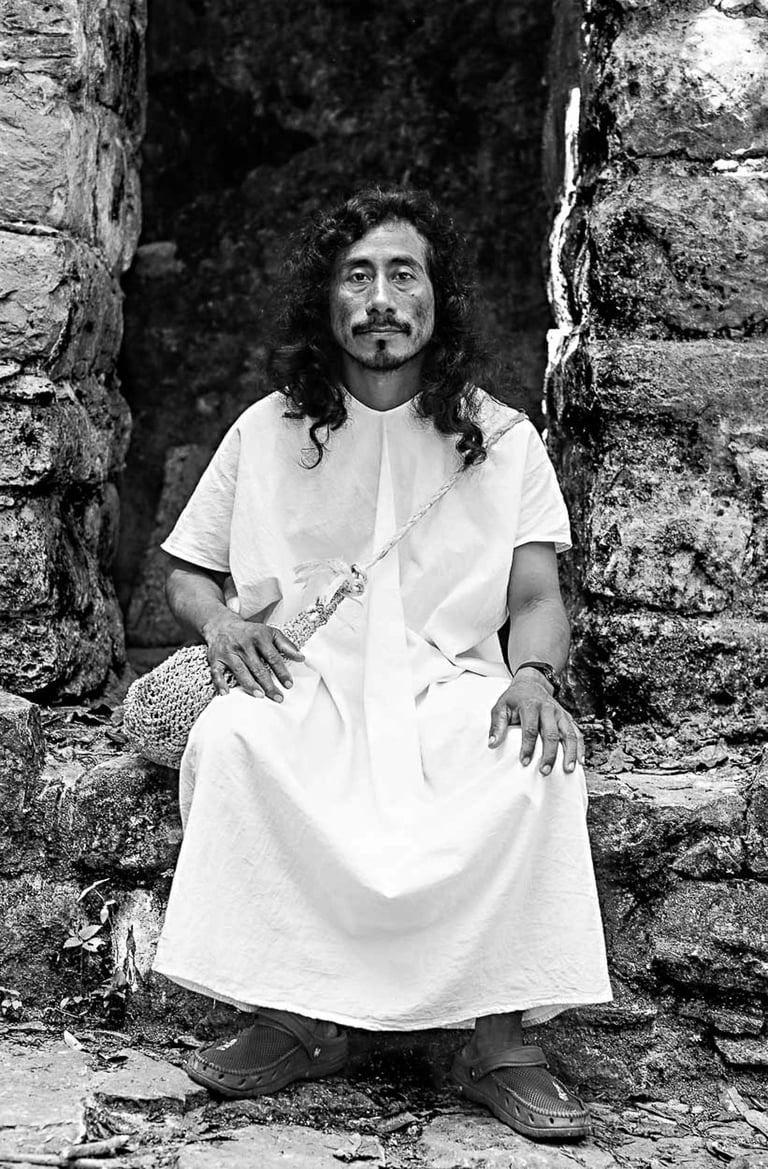
My journey began after visiting the Na-Bolom Museum in San Cristóbal de las Casas, founded in 1950 by Frans Blom, a Danish archaeologist, and Gertrude Duby, a Swiss photographer and environmentalist. A shared professional path united them for life, and their love for one another became eternal. Together they were pioneers in the exploration of the Lacandon Jungle, leading the first government expedition in 1943, and they became friends of los Hombres Verdaderos—the indigenous people who have guarded the secrets of the jungle for more than four centuries: the Lacandons.
The true origins of the Lacandon community remain a mystery. The most plausible explanation, supported by archaeologist Jan de Vos—a Belgian-born historian who dedicated his life to studying the history of Chiapas (1936–24 July 2011)—is that they migrated from the Petén region, in the state of Campeche on the Yucatán Peninsula, to the jungle about four centuries ago to escape the Spanish conquest.
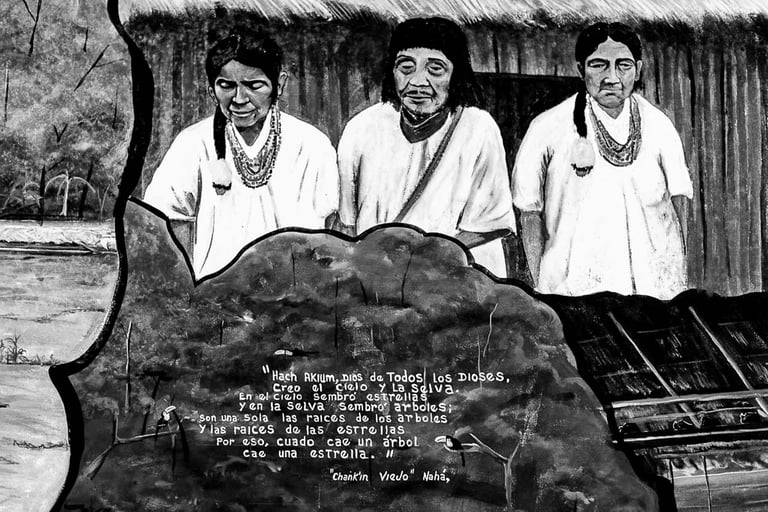
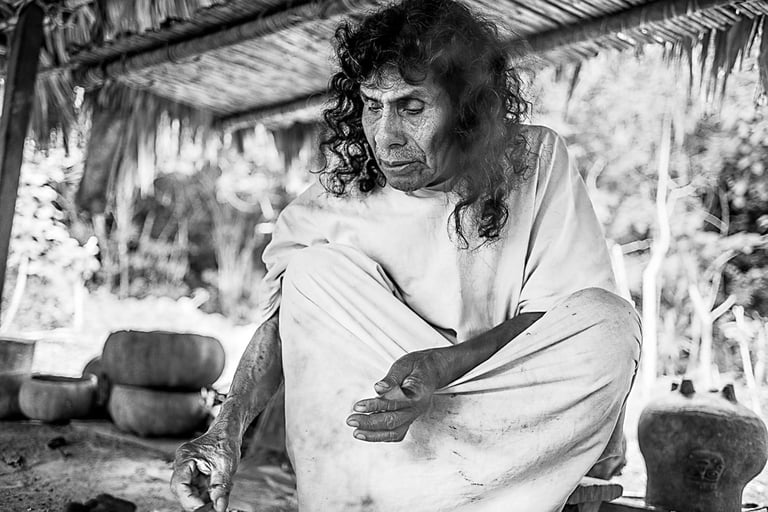
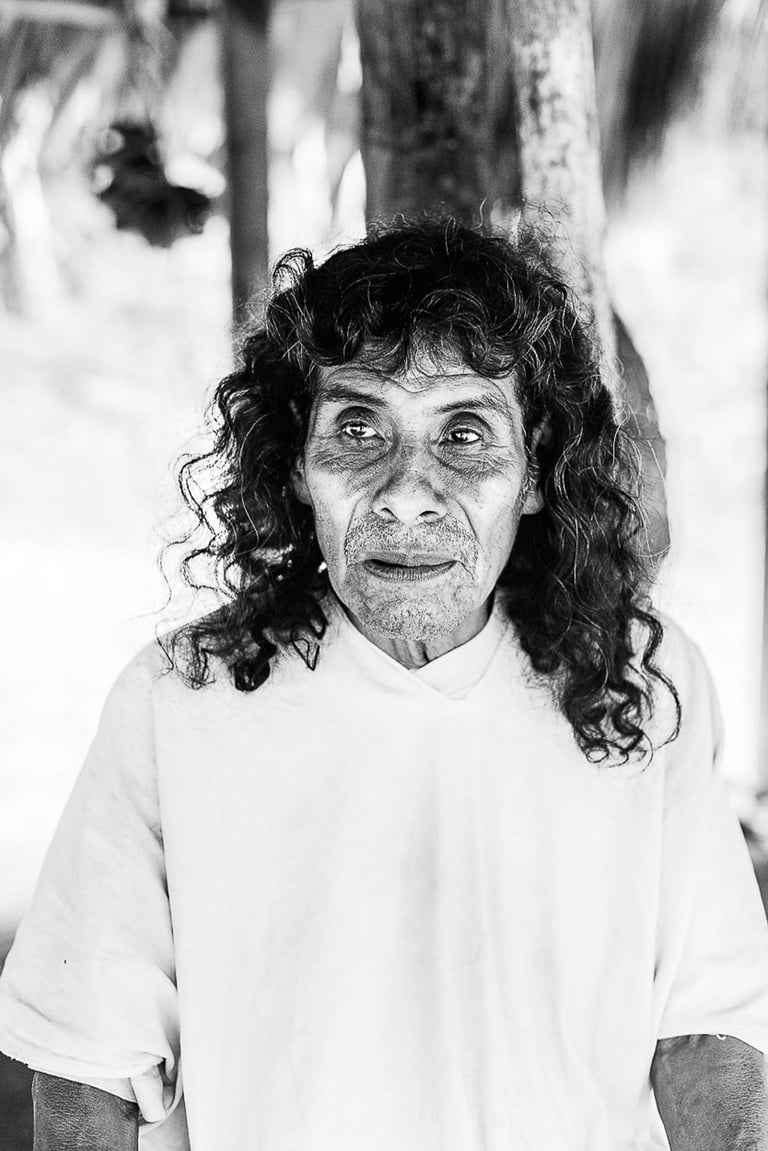
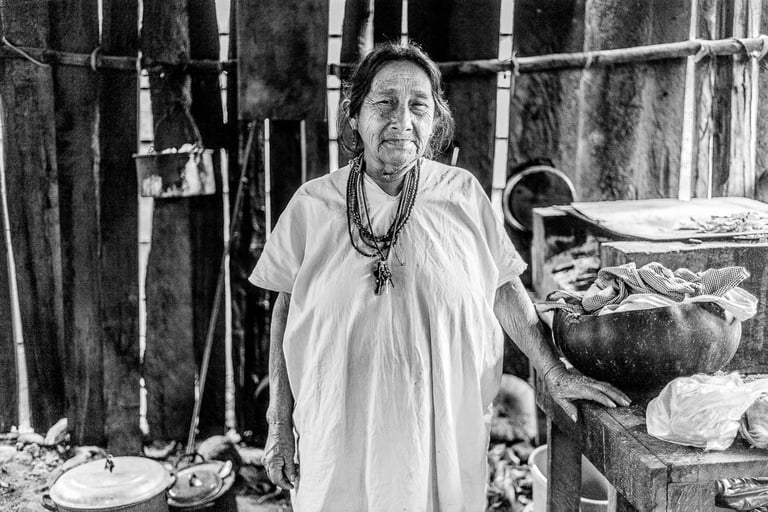
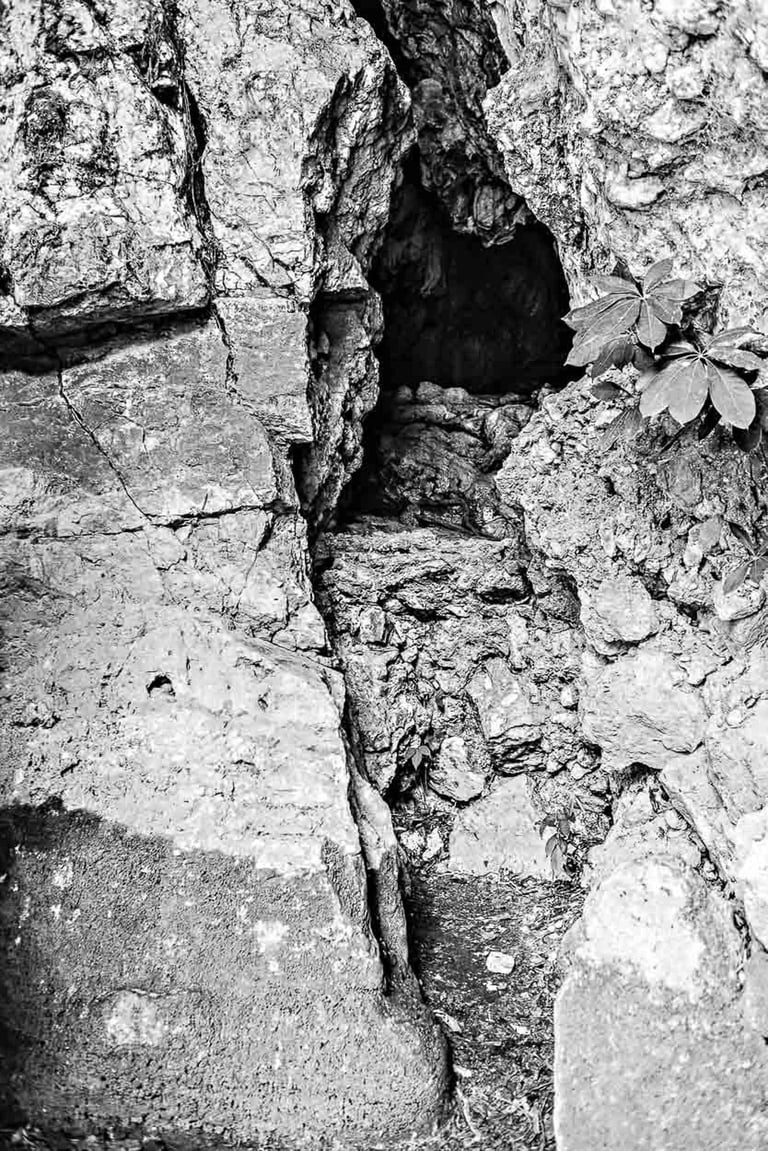
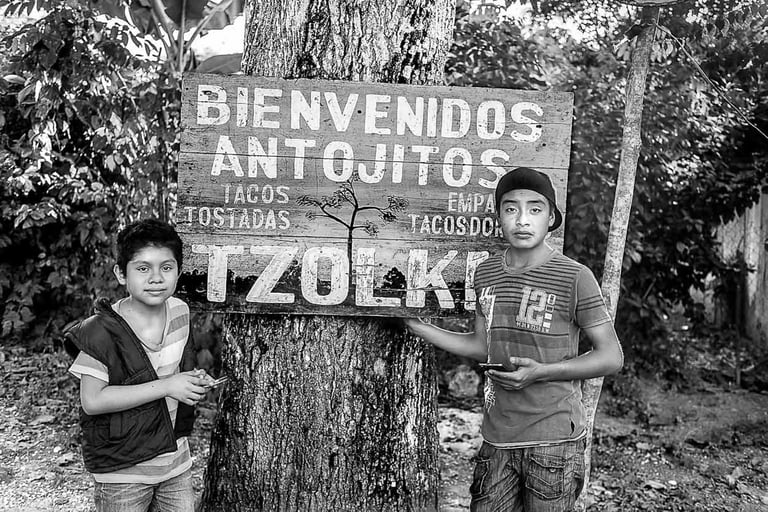
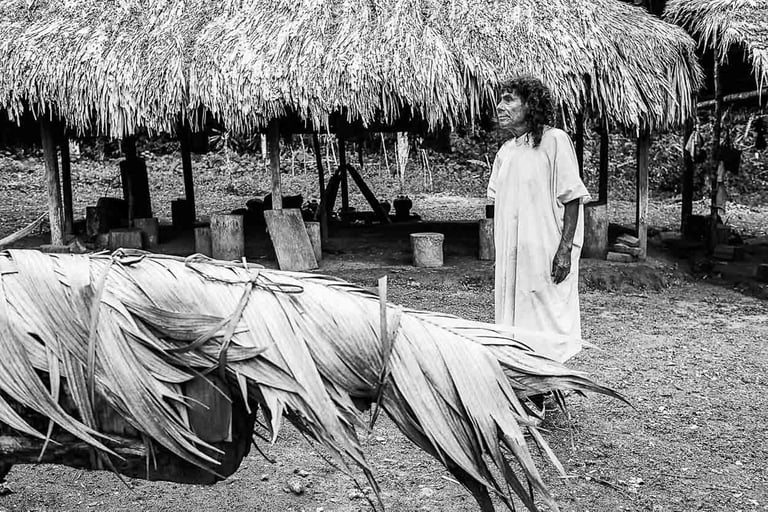
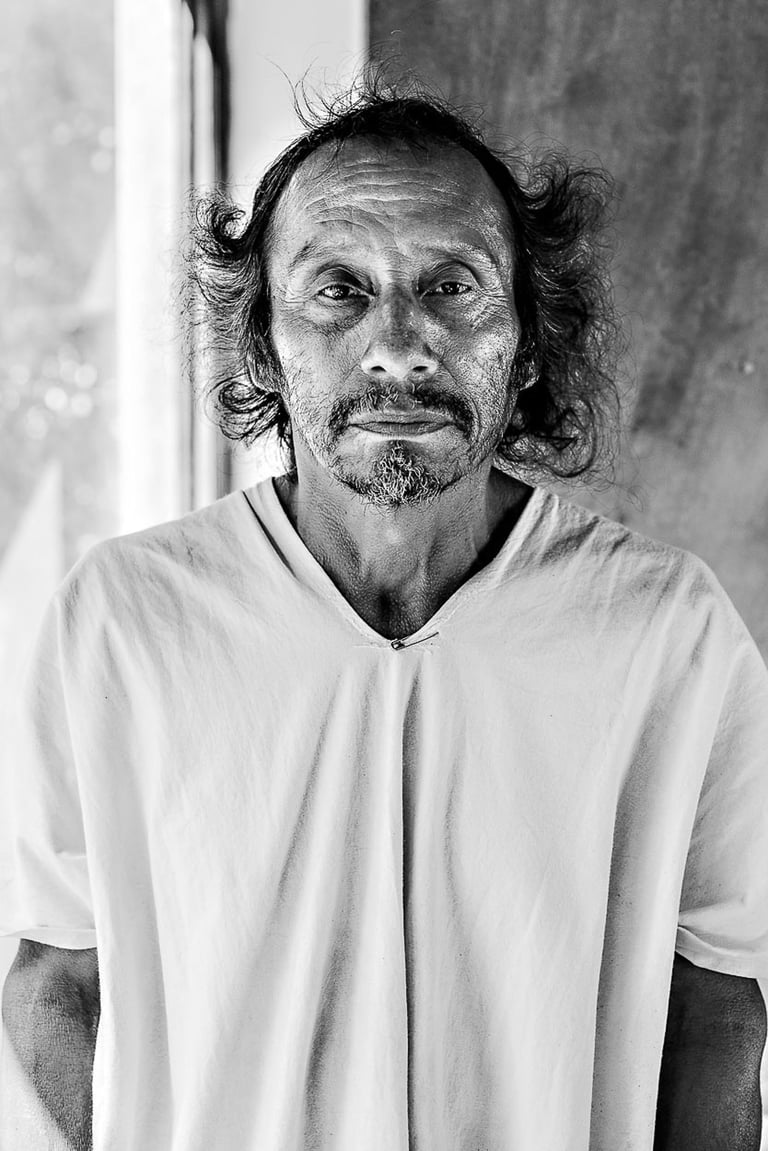
The communities of Nahá, Metzabok, and Lacanjá Chansayab are the three main sites where the last 300 Lacandon families live. Nahá lies deep within the Montes Azules Reserve, beside a wetland, about two hours along a dirt road from Sibal. Nahá is the oldest of the three communities. The new Nahá was built along an old airstrip now out of use. Here, elders such as Matteo the Old, Chankin I, and Antonio continued the traditions of the ancient Lacandons. Matteo and Chankin I passed away years ago; among the elders, Antonio is the only one still alive. He continues to practice shamanism in the only remaining traditional house and in the caves of the Metzabok Lagoon.
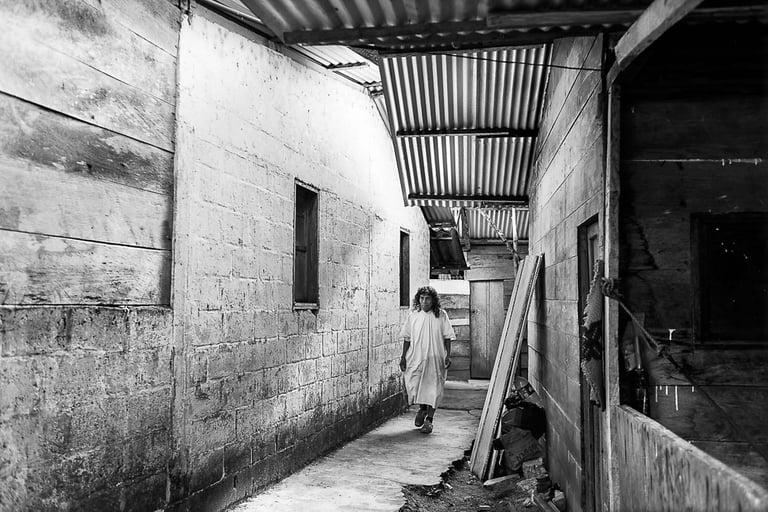
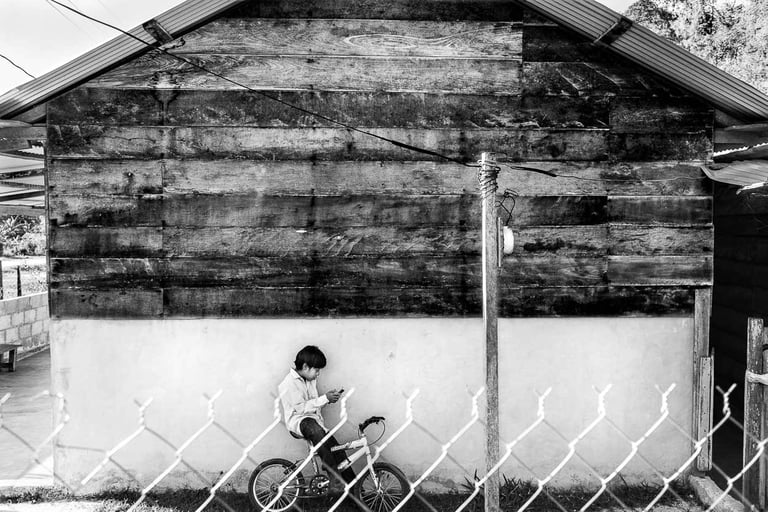
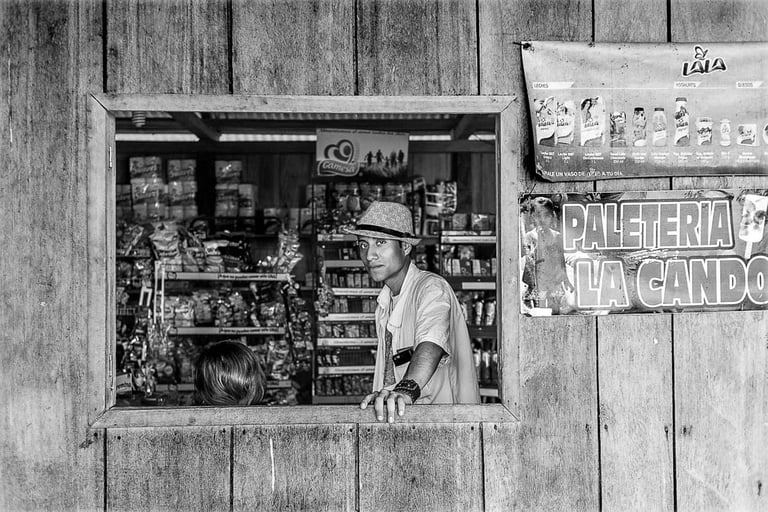
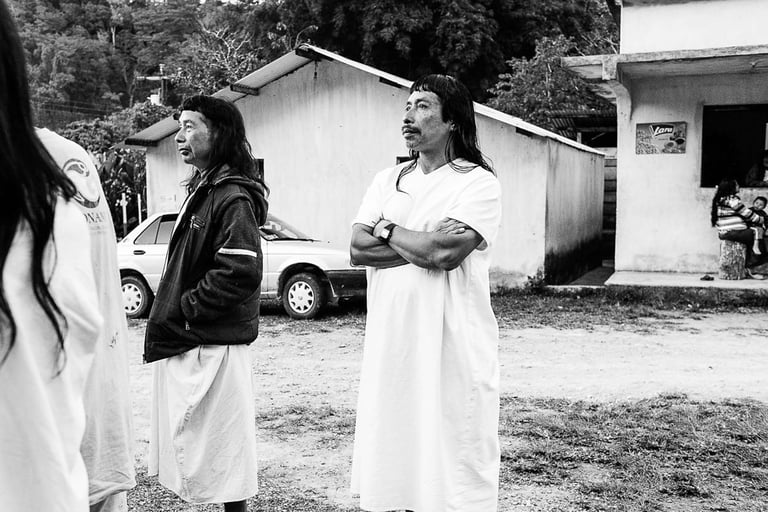
In just over half a century since the first contacts with Gertrude and Frans, the Lacandons have abandoned their original way of life—based on hunting, fishing, and everything the jungle could provide in terms of food and raw materials. Today they live in concrete and wooden houses with metal roofs, and their main activities are tourism and agriculture.
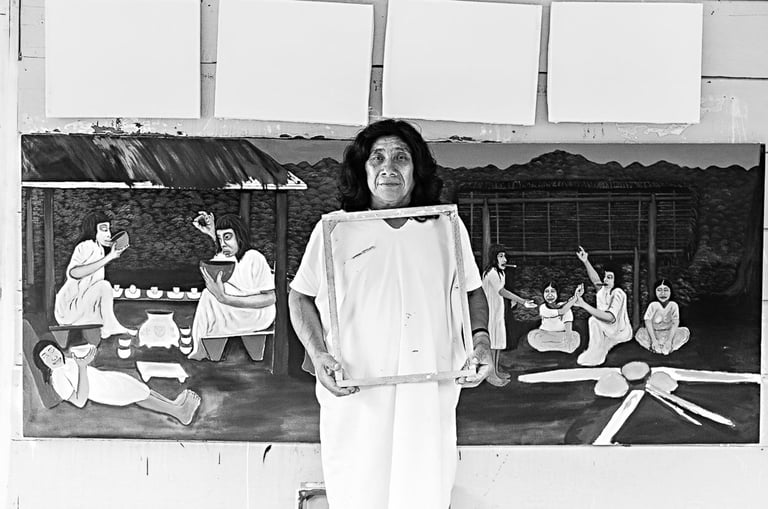
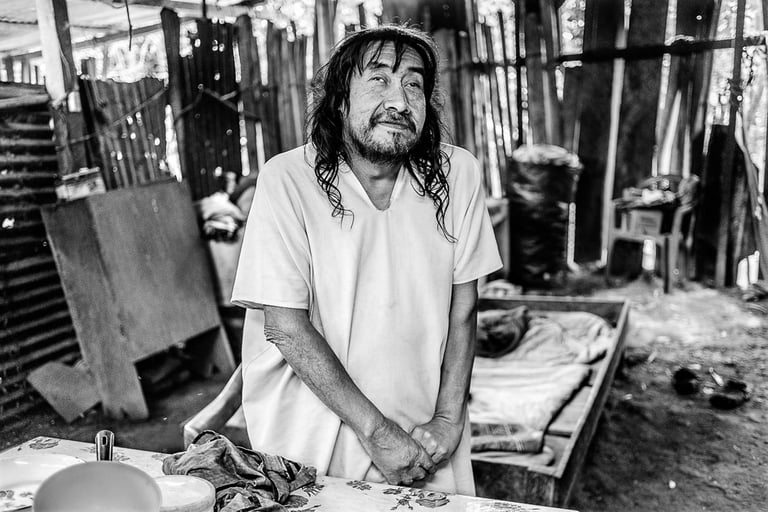
I had the pleasure of meeting several people in Nahá: Mr. Kayumash Chankin, the village painter—“famous even in Spain,” as he proudly reminded me several times; Kin Chankin, owner of the only restaurant in Nahá; Alberto Chankin, the INAH delegate in charge of ticketing for entrance to the pueblo; Juan Chankin, son of Chankin the Old, now a tourist guide; and Paco Chomb Kin, who takes tourists by boat across the lagoon. All Lacandons who now practice “modern” activities to survive in a world that is no longer so hermetic.
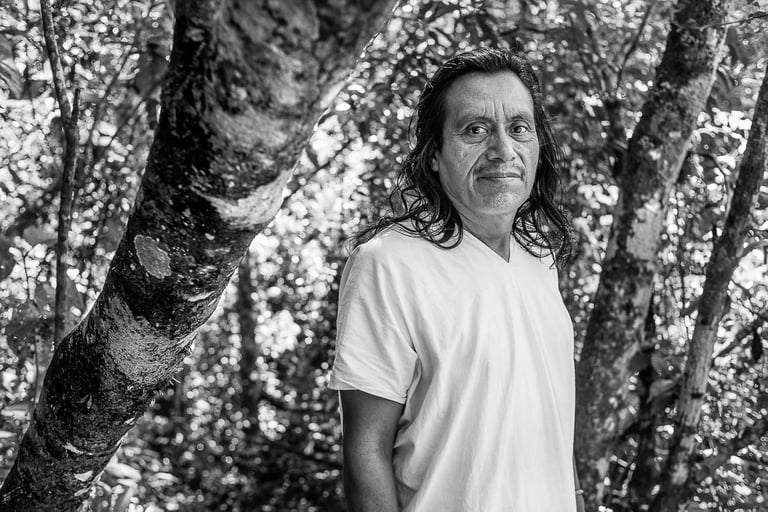
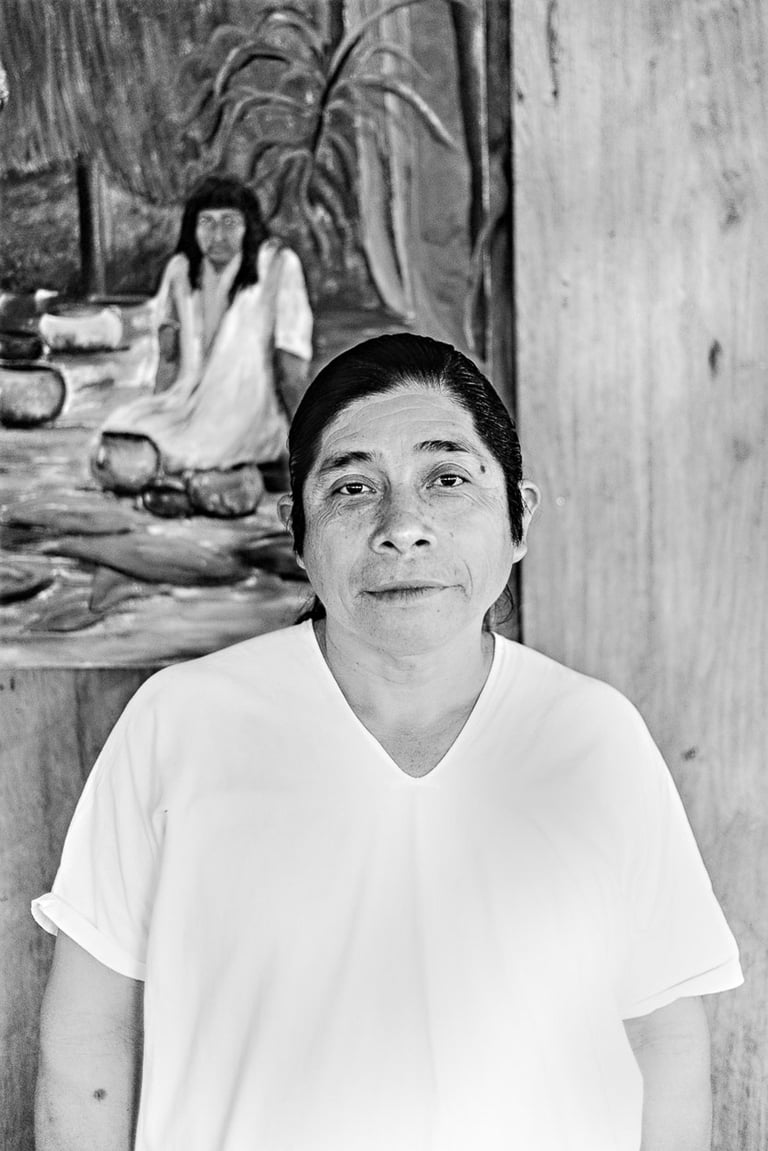
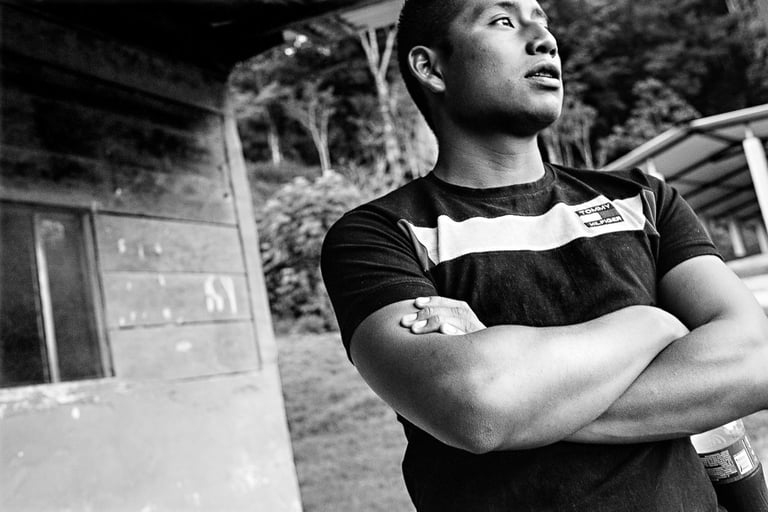
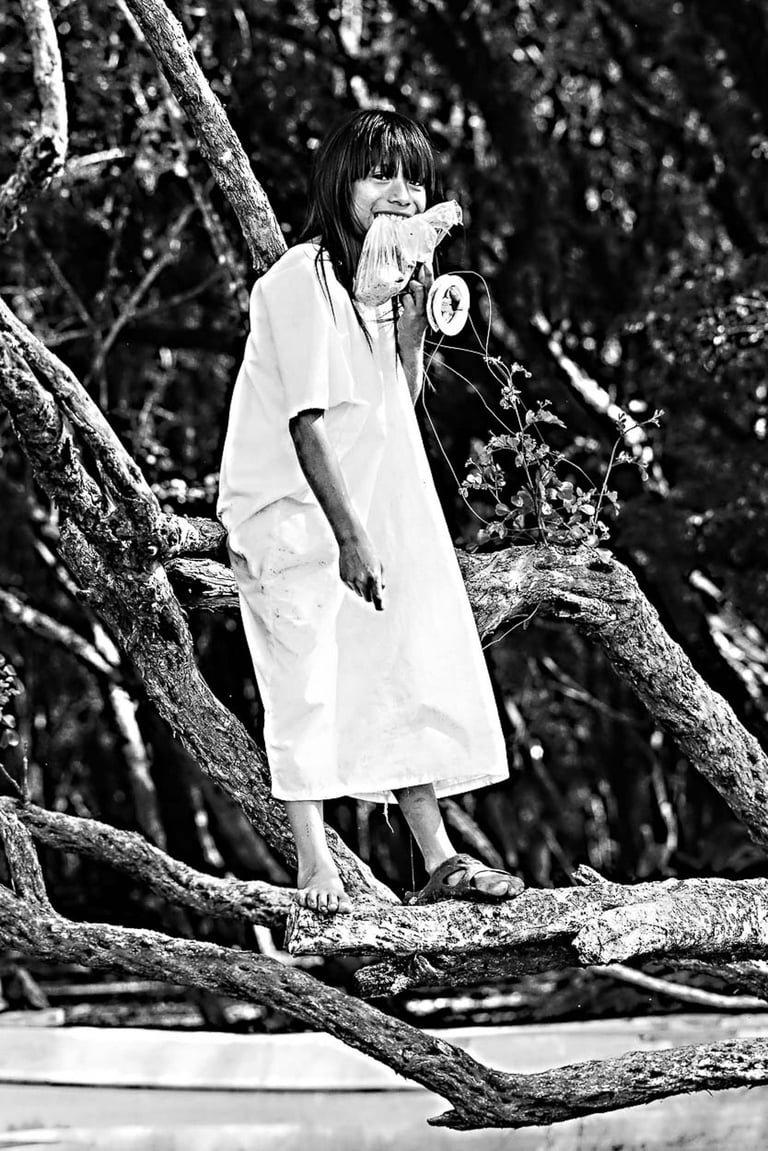
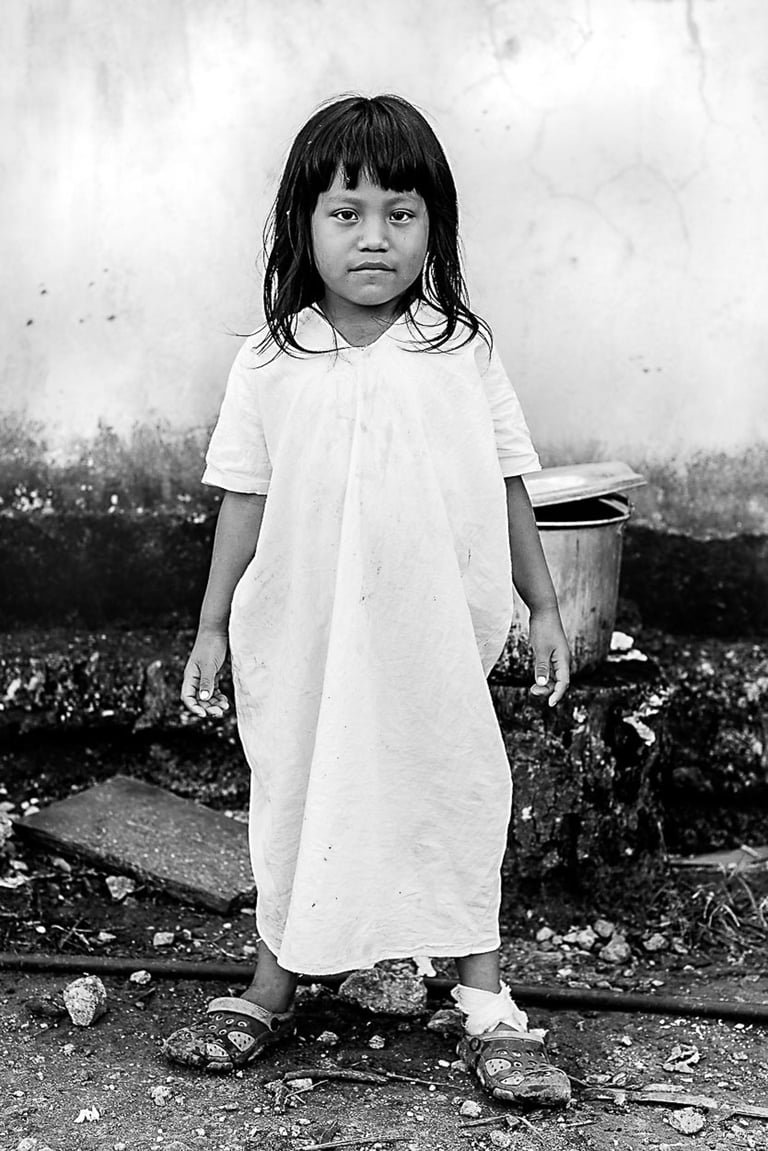
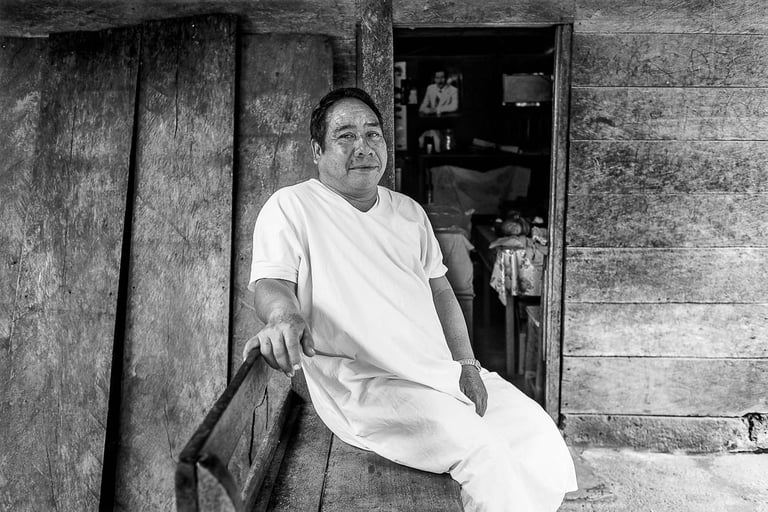
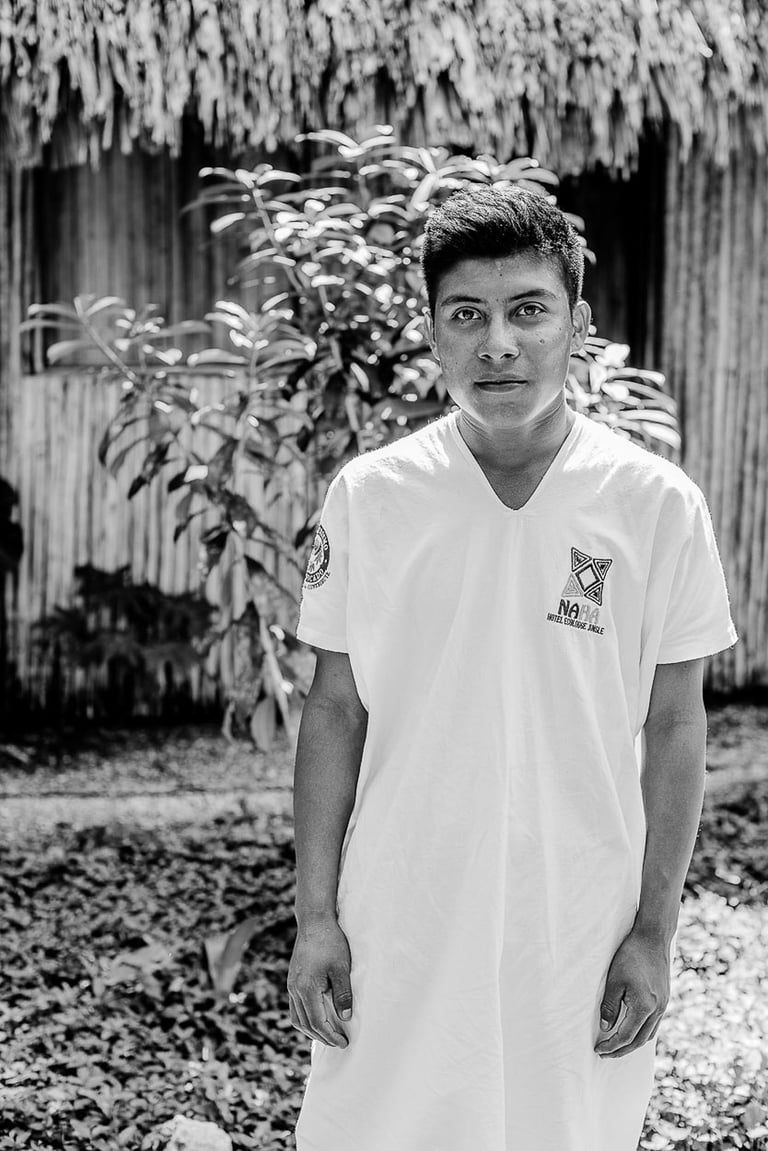
The younger generation is also abandoning the traditional white tunic and long hair—Juan Panyagua already wears Tommy Hilfiger…
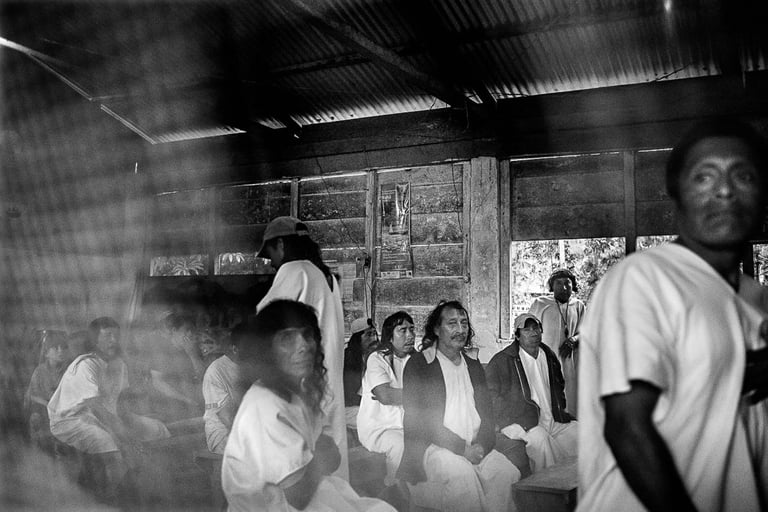
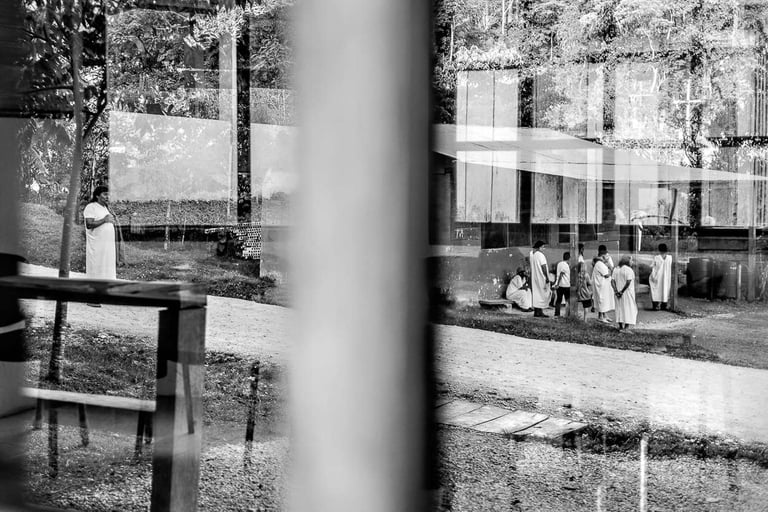
The management of communal affairs is entrusted to an assembly held in Nahá’s communal house. The meeting is announced by a siren; all the men of the village gather and discuss matters concerning the community. Everything unfolds in a remarkably democratic way, considering we are deep in the jungle.
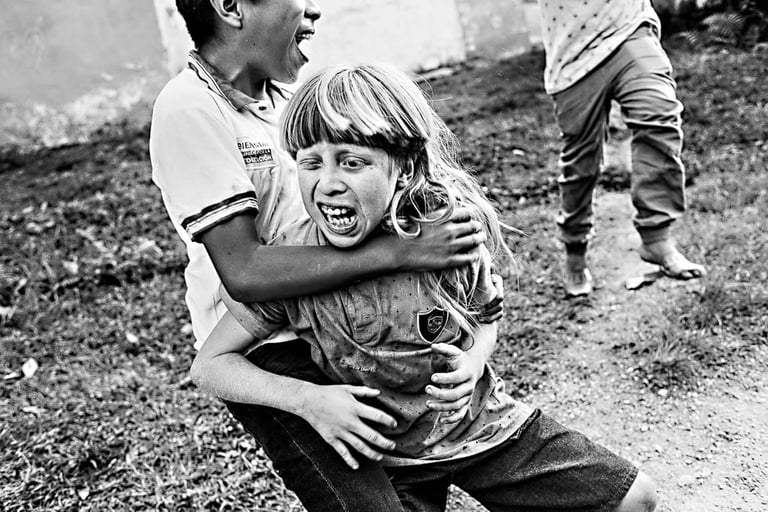
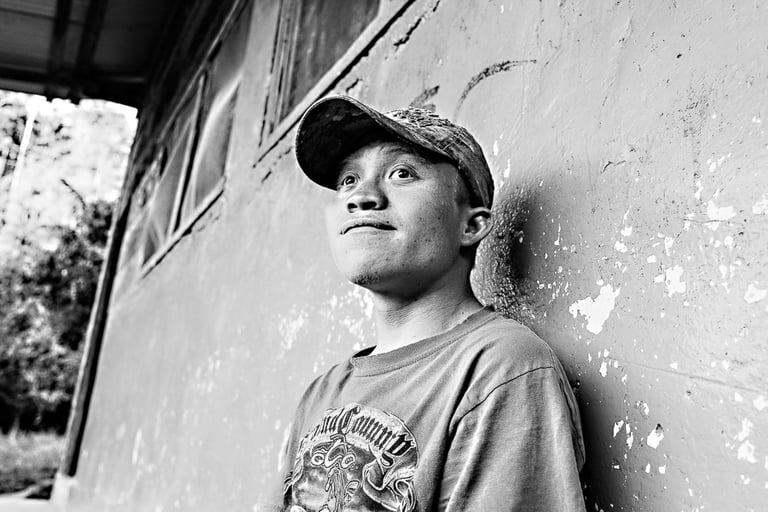
One aspect that deeply struck me is the high number of people affected by genetic disabilities. Centuries of isolation from external society and resulting consanguinity have led to genetic diseases, as confirmed during a visit to the home of Señora Juana Koh while speaking about her brother, Koh Chankin. Walking through the pueblo, I met two young men affected by albinism, Nichin and Chankin Juan, sons of Lacandons. Their two families are settled in Nahá and share maternal kinship.
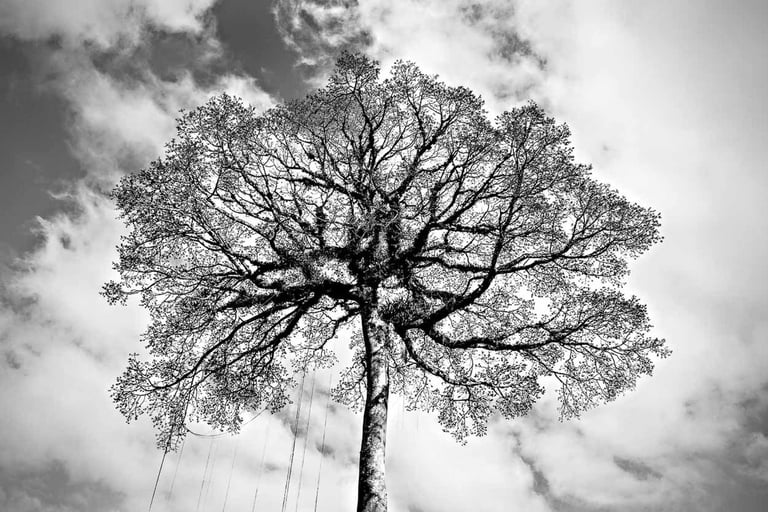
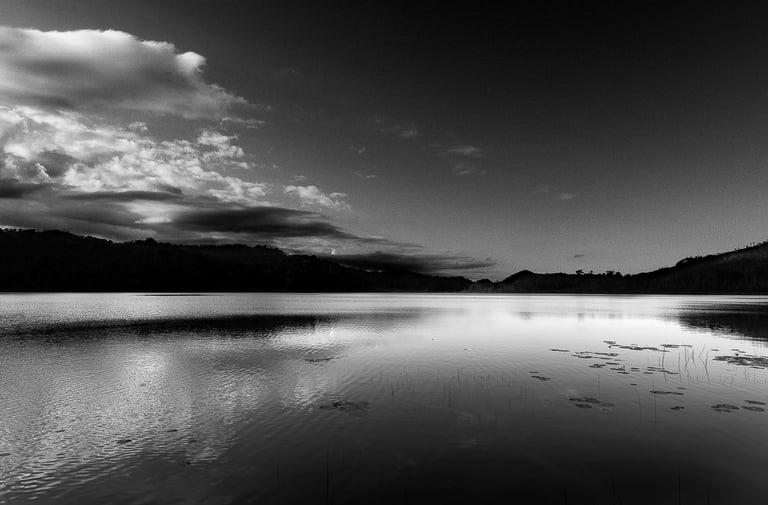
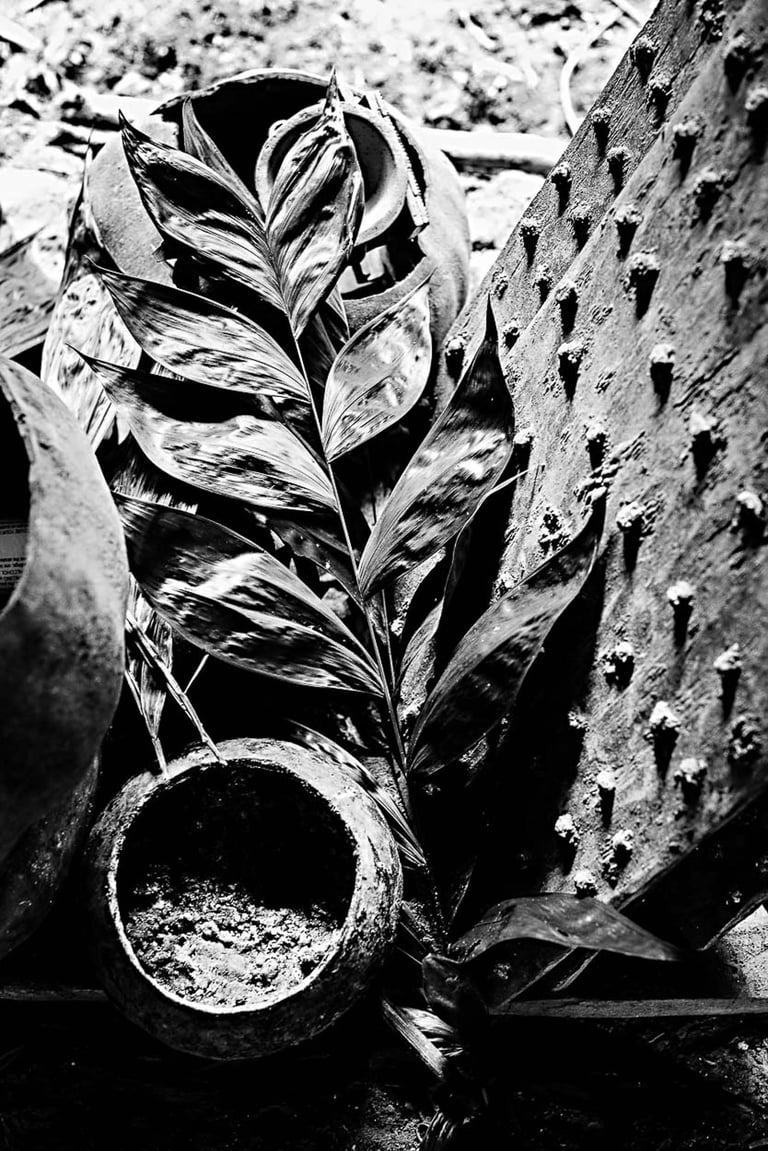
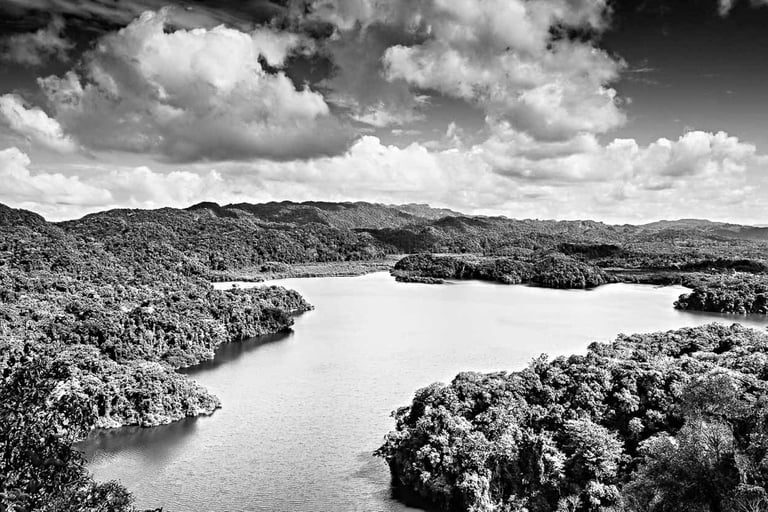
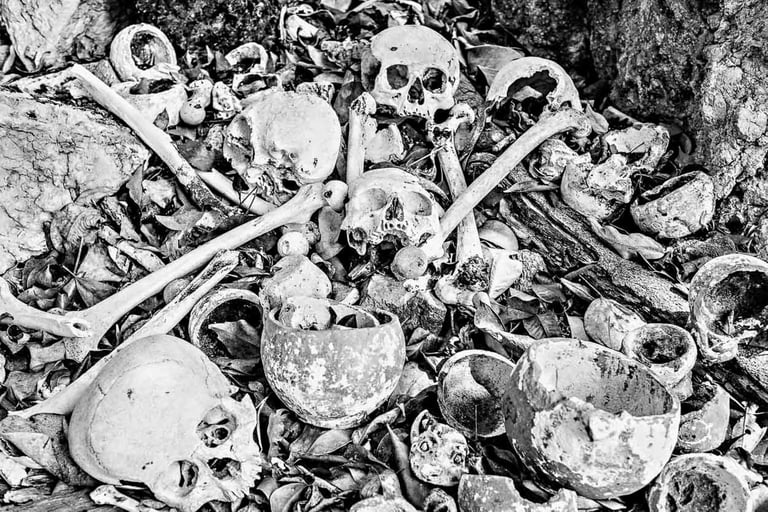
I then traveled toward Metzabok, about an hour and a half from Nahá. Along the way, the road crosses paths with a giant ceiba tree, sacred to Mayan culture. The Metzabok Lagoon, located in a protected area, is breathtaking when seen from the viewpoint—majestic and shimmering in the four o’clock afternoon sun. Elías, a Lacandon devoted to agriculture and tourism, guided me to see human skulls on the other side of the wetlands. In that cave, Antonio Martín Chankin performs ancestral rituals, as evidenced by incense burners and votive offerings.
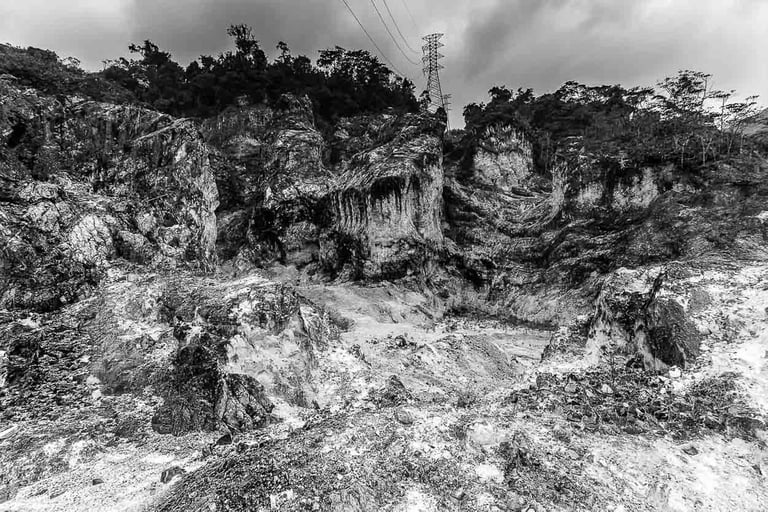
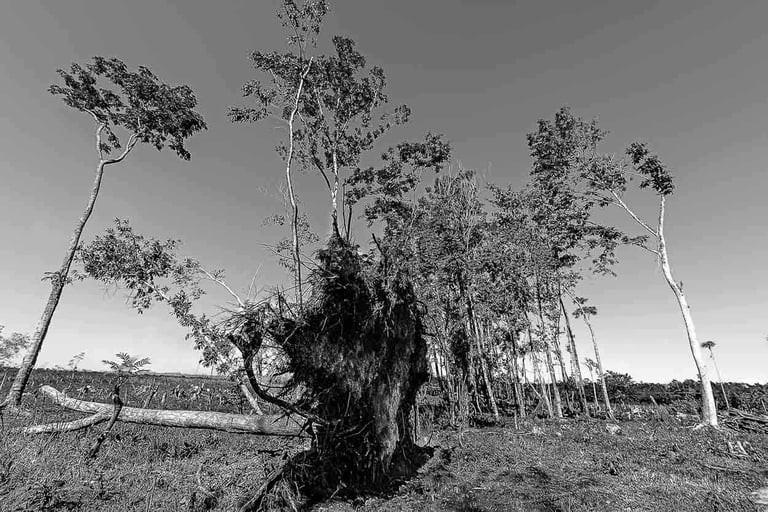
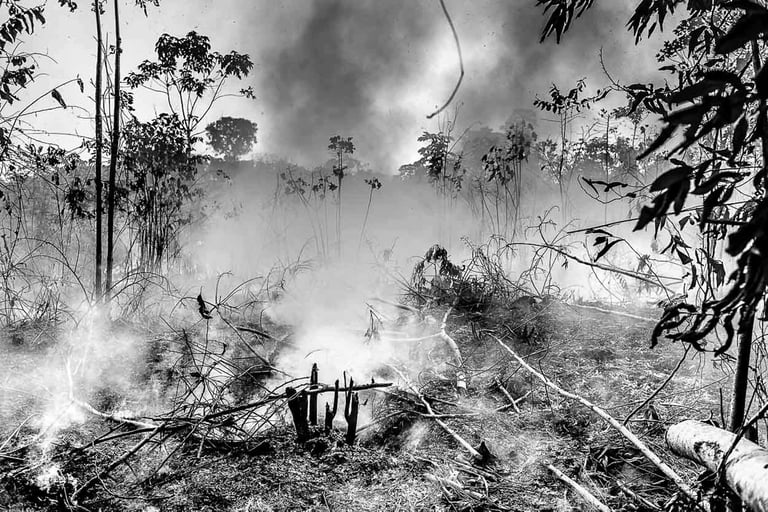
I continued in the small rental car toward Lacanjá Chansayab, and in the heart of the jungle I encountered deforestation and fires—empty spaces stolen from the dense mother jungle. Thousands of hectares of rainforest have been cut down (it seems only 28% remains) since modern man discovered the treasures of the Lacandon Jungle. Agriculture, the timber industry, subsoil exploitation, and cattle ranching are the jungle’s poisons. The rich underground resources and valuable timber have attracted large national and foreign corporations since the 19th century, while large communities of Tzeltales and Choles were brought to this virgin land after agrarian reform and land distribution by the government in 1972.
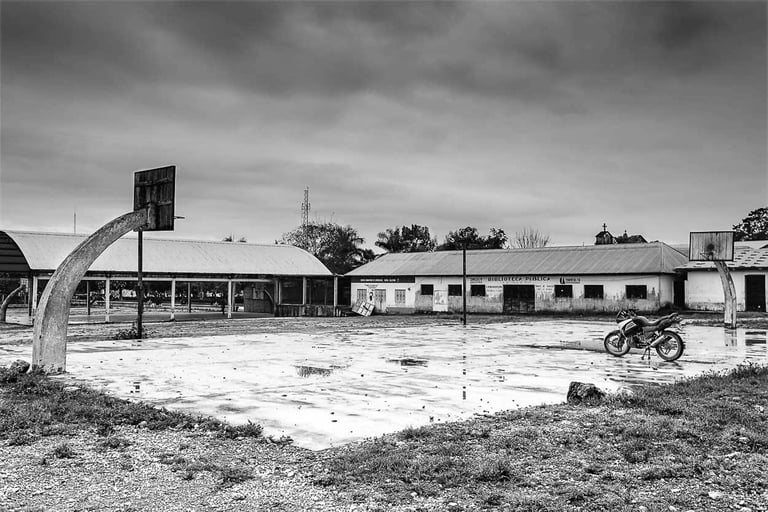
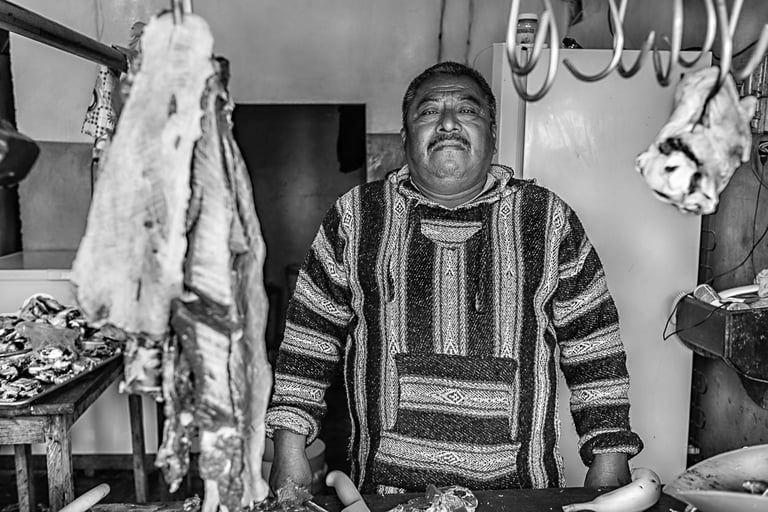
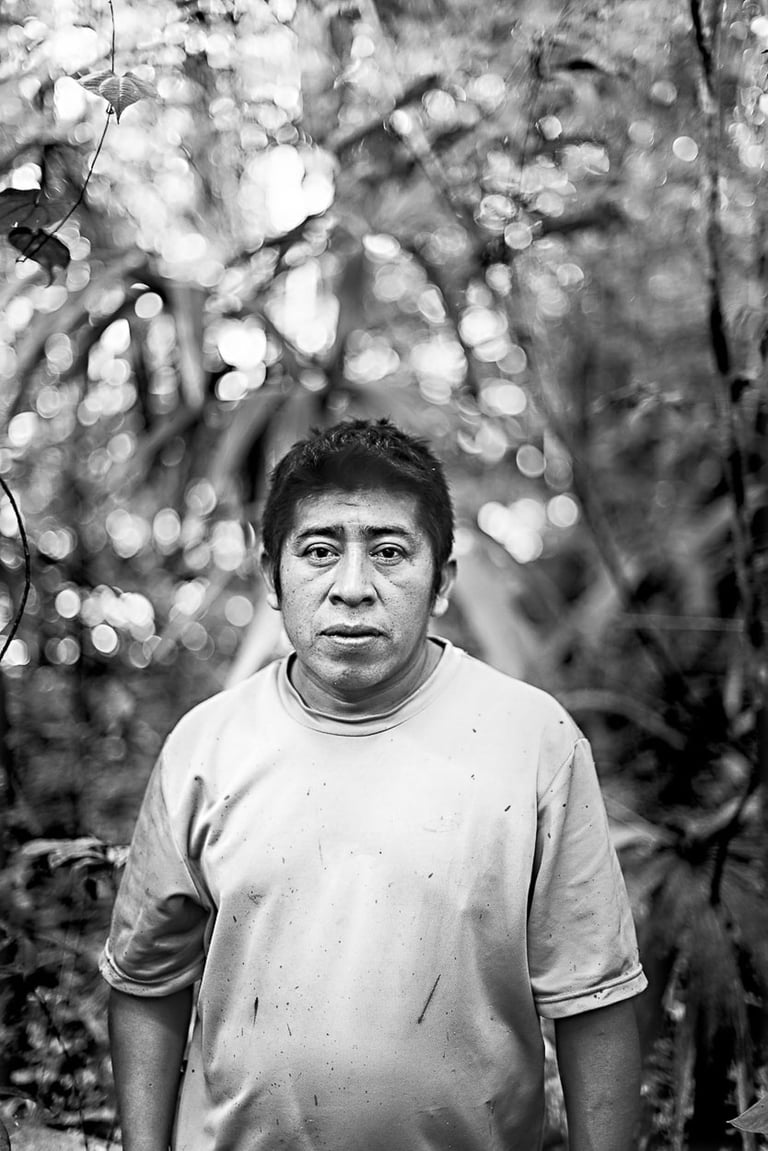
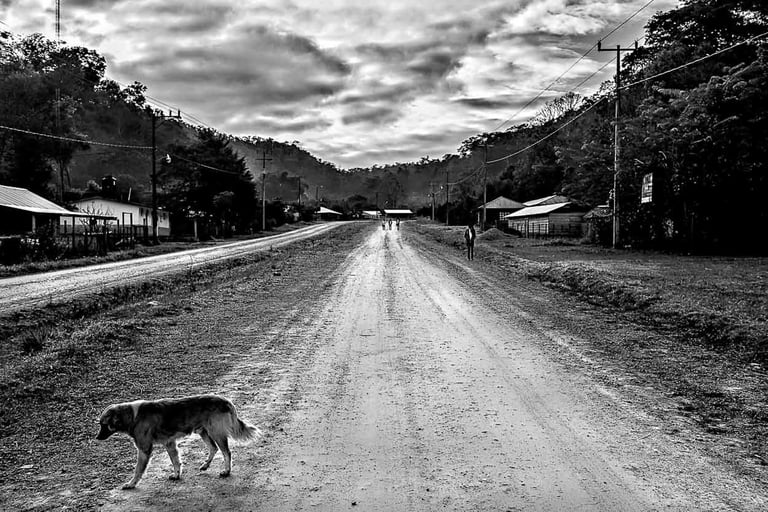
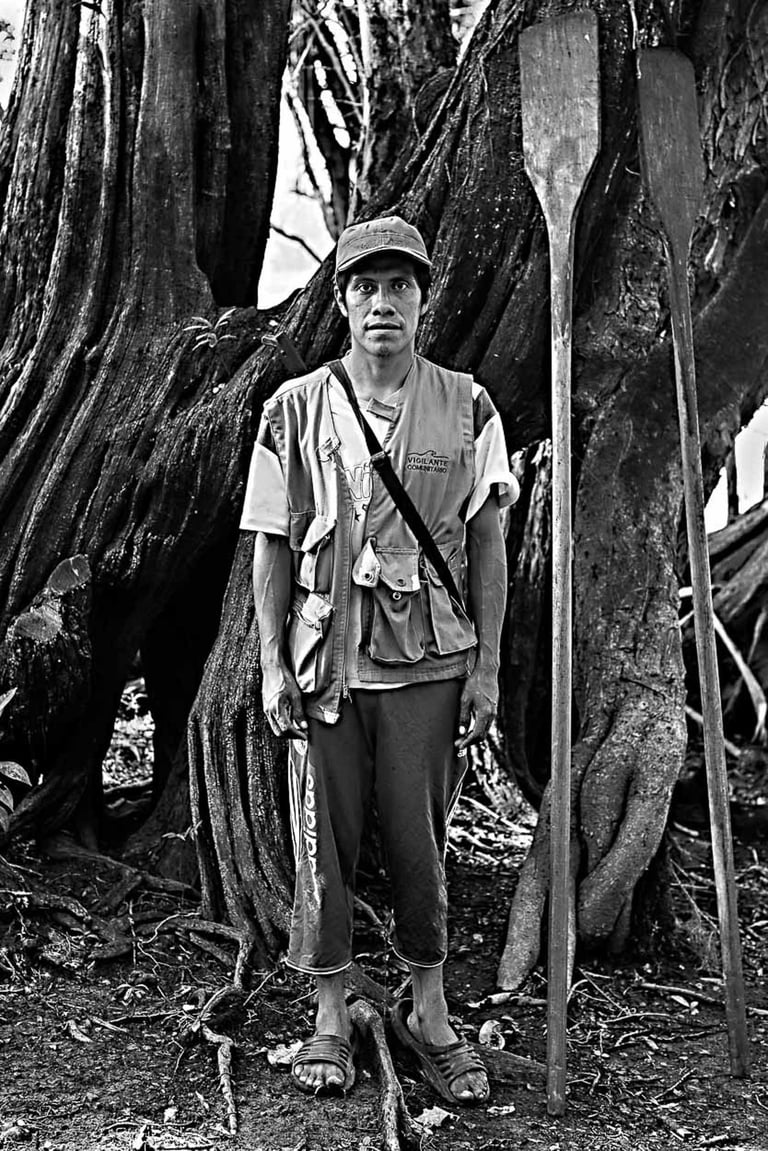
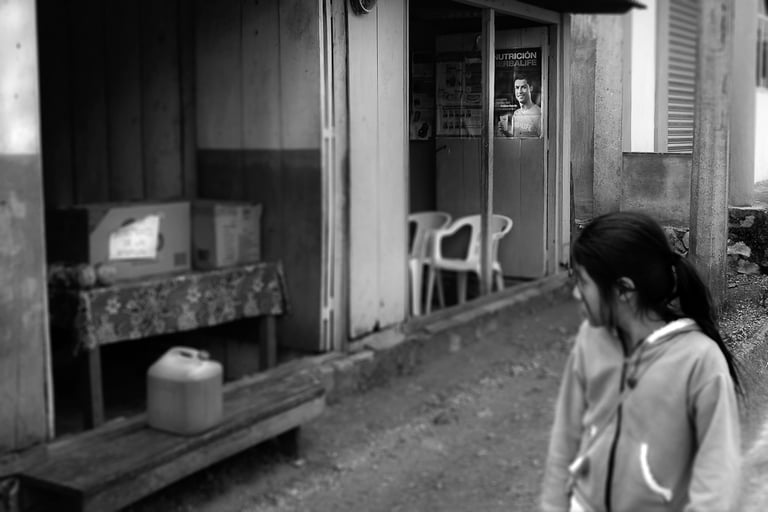
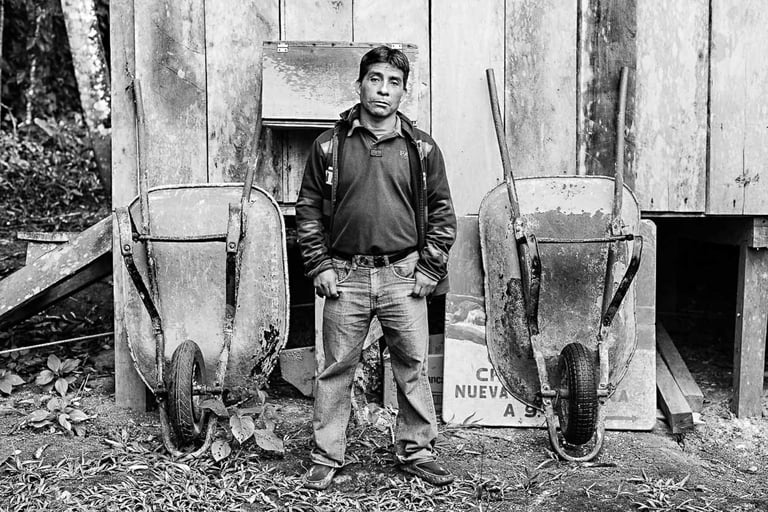
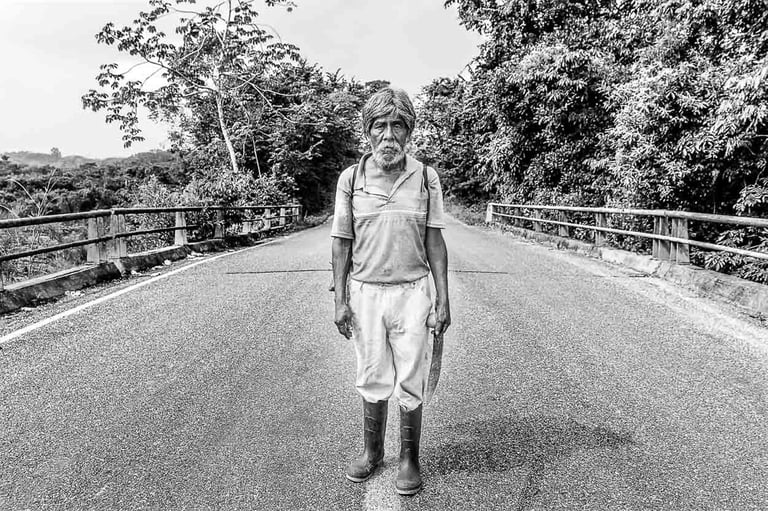
I visited Nueva Palestina, once called Velasco Suárez (named after the governor who founded it for the Tzeltal community), a town where abandonment is as gray as the old concrete. Herbalife has arrived here too… I stopped to talk with the village butcher, who told me—half excited, half mysterious—that soon they would have a soccer field. Around us were fields and workers with machetes, men from nearby communities. Rogelio, of Tzotzil ethnicity, is responsible for maintaining a hacienda with 14 cows (I photographed him with wheelbarrows), and Mario—who accompanied me into the jungle—works for the patrón from 7 a.m. until evening for 80 pesos (4–5 USD), caring for the property with his machete. Isaías (the man with the machete) carried in his gaze the exhaustion of 30 years of labor in the fields. I listened to stories of men who arrived here 20, 30, even 40 years ago, hoping simply to survive.
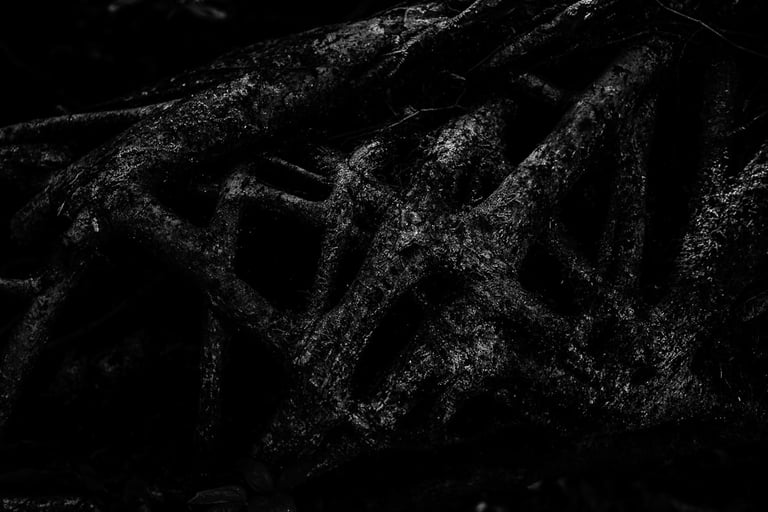
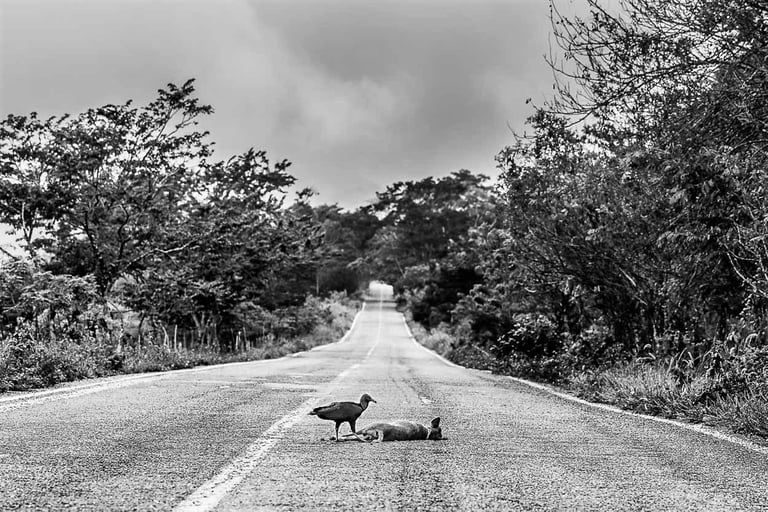
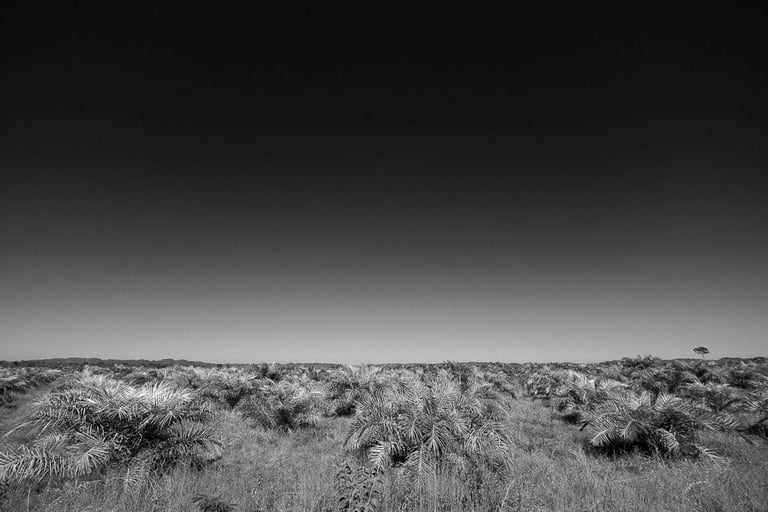
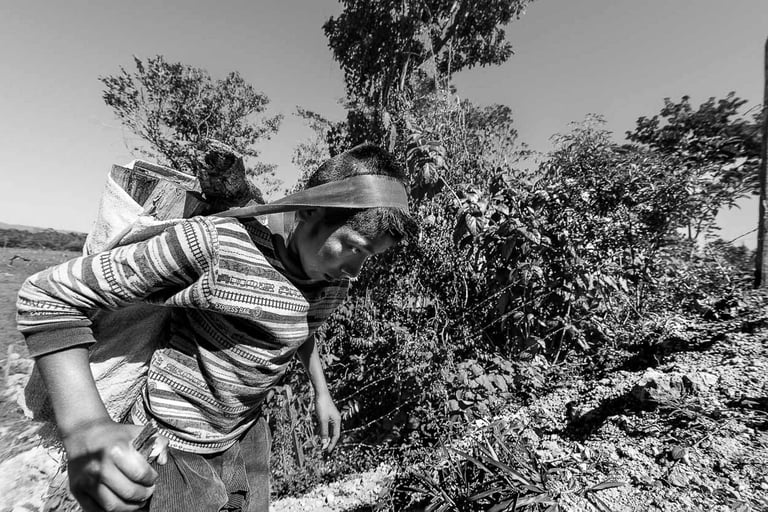
Driving toward Lacanjá Chansayab along the “Fronteriza” highway that divides Mexico from Guatemala, I saw the Montes Azules Reserve on one side and, on the other, vast plantations of African palm grown to extract the infamous palm oil. Highway 307 separates the Montes Azules Reserve from the plain. Two opposite worlds divided by a strip of asphalt: on one side, mountains and jungle filling every space with dense green; on the west side, blue sky breathing above open grasslands—fullness and emptiness. What is now flat and uniform was dense jungle decades ago. In the middle of the plain, an uprooted tree exposes its roots… a little farther on, a child carries firewood on his back for the evening meal.
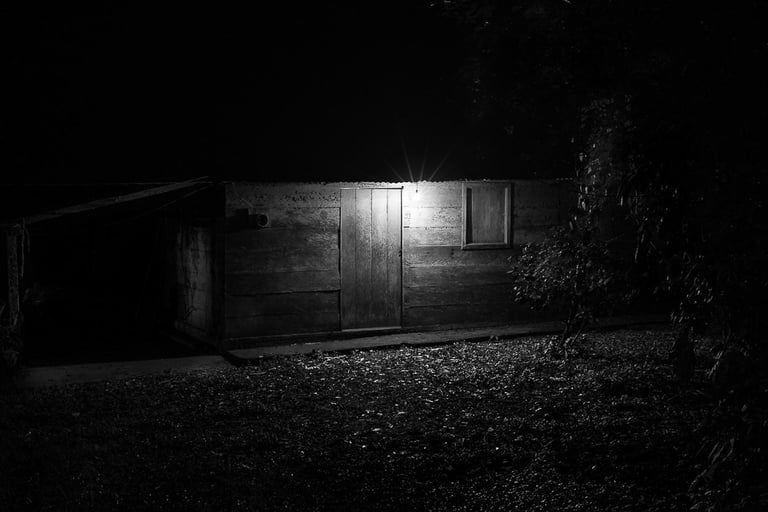
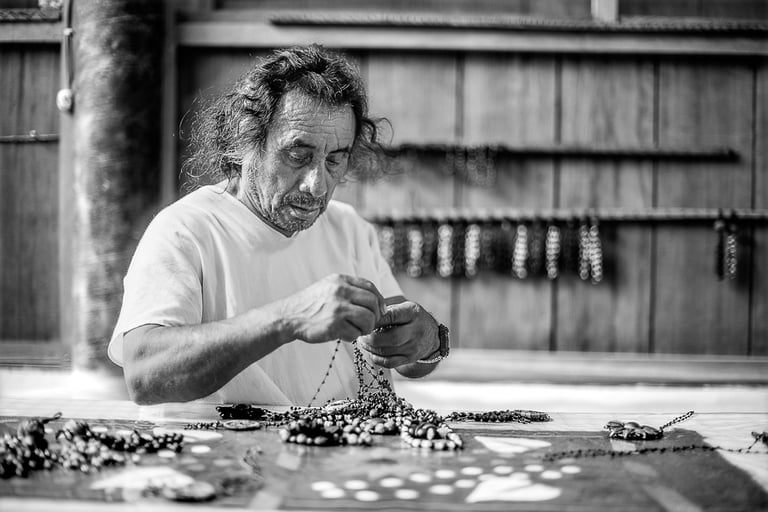
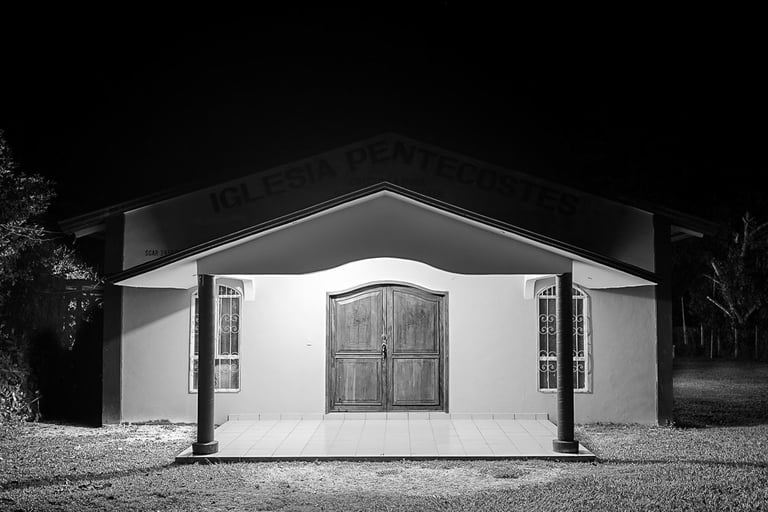
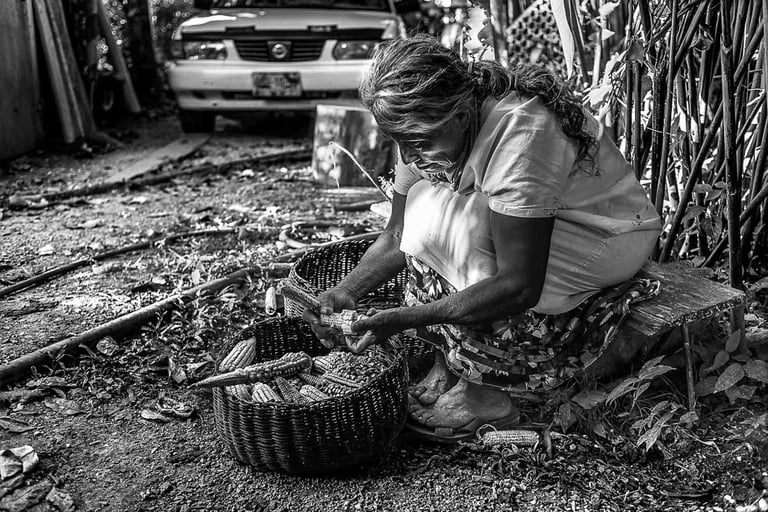
I arrived in Lacanjá Chansayab at night. Darkness enveloped the village; from a wooden house came the sound of a television, and the Pentecostal church suggested I was in the village center. The following day I met the family of Enrique Chankin Panyagua who, together with his mother Lola Chankin Panyagua, owns a small ecotourism center. I spent time with him as he repaired necklaces made from jungle seeds to sell to tourists, while she shelled corn behind the house, in the best Mayan tradition. Enrique told me how his world has changed—how, over 20 years, he has seen people arrive and wondered why.
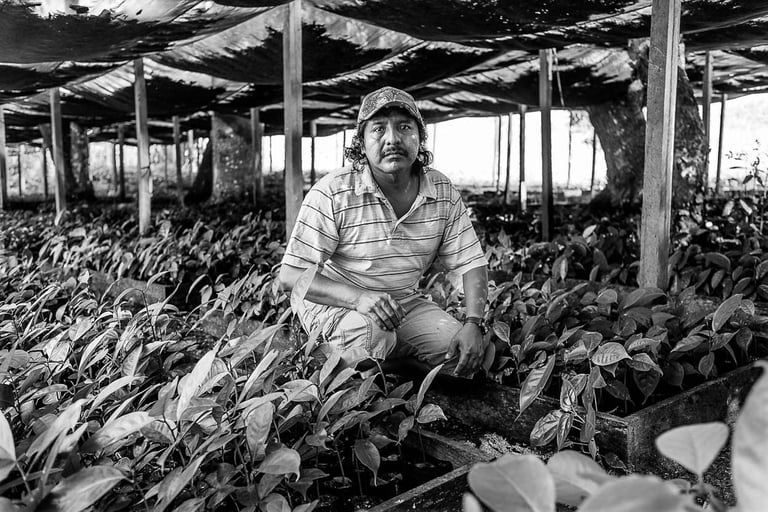
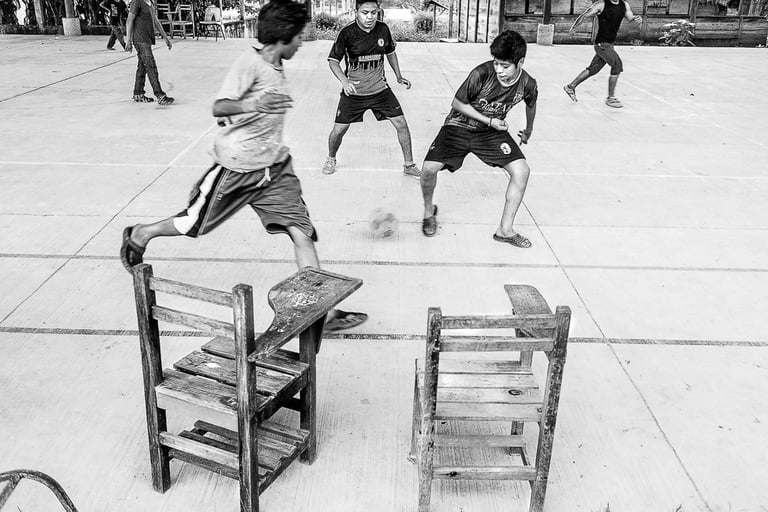
The village lies near the ruins of Bonampak and is accessible from Highway 307, making Lacanjá Chansayab the Lacandon site most influenced by contemporary culture. Few people still dress traditionally; most young people now wear modern clothes, attend government schools, and play soccer at the sports center. During my stay I met two figures from Lacanjá: Mario, who with his small nursery tries to repopulate the jungle with native trees, and Jorge Panyagua, who accompanied me on a walk through the jungle to the ceremonial Mayan ruins of Lacanjá Chansayab.
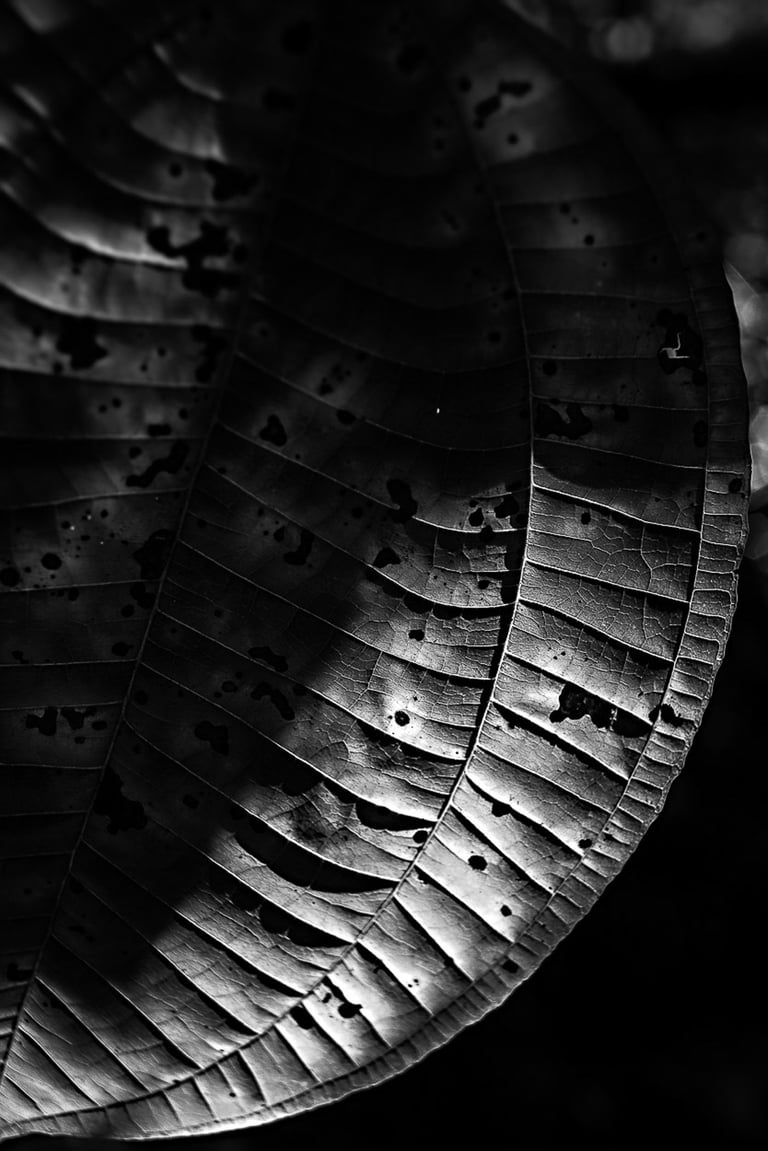
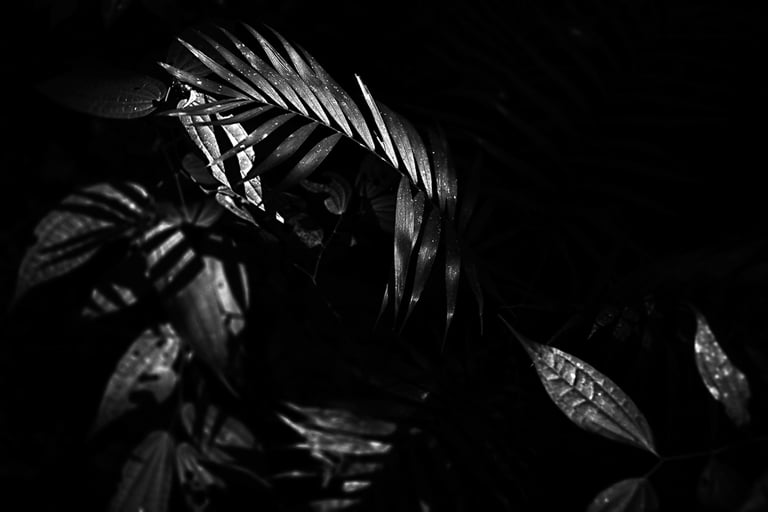
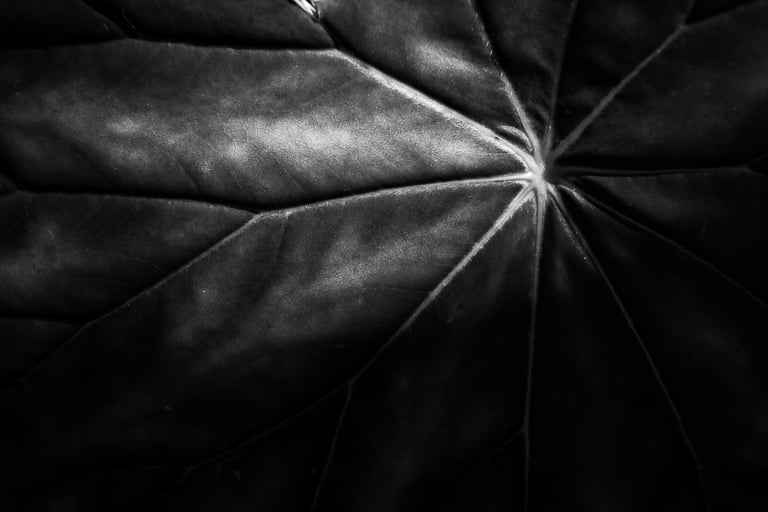
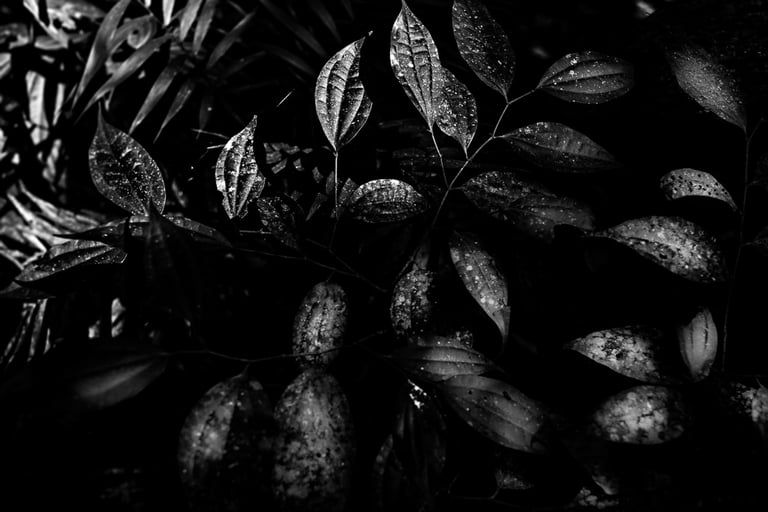
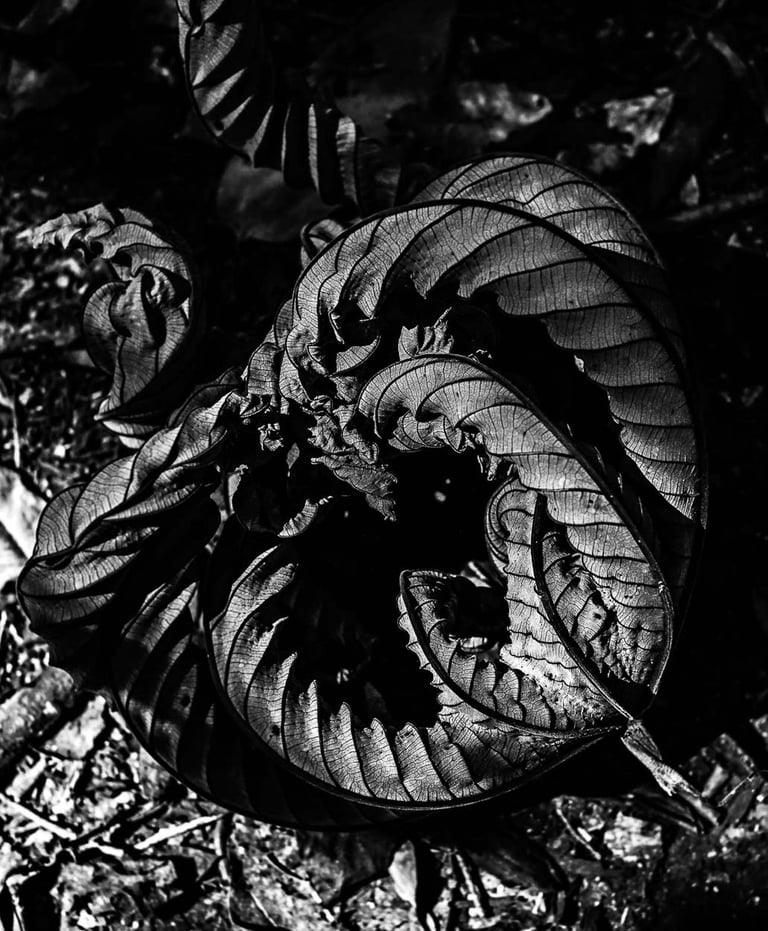
Walking through the jungle, my eyes get lost among countless shapes and shadows, and I think about how long the Lacandons lived isolated in this environment. Now I understand why… the jungle was refuge and mother, the origin of everything


IMAGES:
CHIAPAS, MEXICO 2017
Fine Art Prints — Archival pigment prints produced on museum-quality fine art paper, made to preserve the depth, detail and character of each photograph.
Selected images are available for editorial licensing, including digital publications, upon request